 Download slides
Middle East conflict disrupts global transportation networks
Onthispage
Disruptions accelerate capacity tightening into March
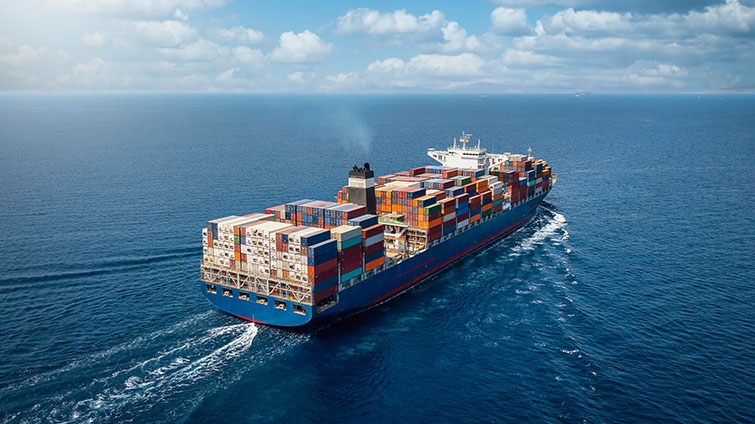
Escalating military activity in the Middle East is materially disrupting global transportation networks, with impacts extending far beyond the region. In ocean freight, carriers have suspended transit through the Suez Canal and further delayed or paused planned returns, making Red Sea routing highly service specific.
The Strait of Hormuz remains closed, constraining access to the Gulf and effectively removing the Red Sea corridor from both ends. As a result, Asia‒Europe and Gulf-linked cargo is being rerouted around the Cape of Good Hope for at least the near term.
These diversions are adding significant transit time—often measured in weeks rather than days—particularly for Middle East and Gulf freight flows. As vessels are rerouted or held outside the region, congestion and operational backlogs are emerging at regional transshipment hubs. Even where the share of the global fleet directly affected appears limited, the impact on schedules, equipment positioning, and network balance is outsized, reducing effective capacity across adjacent trade lanes and increasing variability in transit outcomes.
For shippers with Gulf-origin cargo—including from Iraq, Kuwait, Qatar, Saudi Arabia, and United Arab Emirates—these ocean disruptions coincide with severe constraints on air freight. Airspace restrictions and reduced operations at major Gulf hubs have limited traditional transit corridors at the same time that ocean routings are disrupted, creating a compounding, cross-modal constraint.
Routing flexibility is materially reduced and freight that would typically move through the Gulf is being displaced into alternate gateways across Asia, Europe, and North America. For additional details on the impact to air freight, see the air freight section of this report.
As these effects converge, March is being defined less by demand growth and more by structural tightening driven by rerouting, longer voyage distances, and equipment imbalances. These conditions are translating into higher operating costs, including fuel-related surcharges, risk premiums, and deviation-driven fees. Plan for less predictable transit times and more limited routing options as carriers adjust networks to manage disruption and risk.
See our client advisories for updates.
Ocean networks begin to reassemble after Lunar New Year
As March begins, ocean freight conditions are being shaped less by demand shifts and more by how carrier networks are coming back online after Lunar New Year. February was shaped by widespread blank sailings, capacity reductions, and service suspensions as factories across Asia shut down for Lunar New Year and shipping demand softened. As of early March, this reassembly process remains uneven, with services and schedules beginning to return selectively and with less tolerance for disruption than during the pullback phase.
This distinction matters. The challenge in March is not a lack of capacity, but the process of putting networks back together after intentional disruption. Service strings, port rotations, and inland connections are returning at different speeds, reducing tolerance for missed cutoffs and late adjustments as schedules and cargo flows recalibrate.
Uneven restart across major east–west lanes
This reassembly is occurring across all major east–west lanes, but not at the same pace. On the Trans-Pacific lane, capacity is returning gradually following Lunar New Year blank sailings that removed more than 30% of scheduled space at their peak.
Asia–North America services into the United States East Coast (USEC) are beginning to normalize earlier than West Coast loops, which are scheduled to return closer to mid March. This staggered restart means space availability may differ meaningfully by port pair and by week, even within the same trade lane.
On Asia–Europe lanes, conditions into early March continue to reflect the mechanical effects of blank sailings and accumulated roll pools rather than a sudden increase in demand. Vessels remain full on some services into the first week of March, not because volumes have surged, but because capacity was intentionally reduced and cargo was deferred. As sailings resume, expect conditions to be driven less by overall demand and more by how quickly roll cargo clears and spreads across services.
North America exports highlight narrowing margins
For exports from North America, similar dynamics are at play. Capacity to Europe has been constrained out of the United States Gulf and West Coast, with comparatively better availability from the East Coast. However, upcoming service removals and consolidations effective late March and early April—particularly on Trans-Atlantic westbound lanes—indicate the margin for error may narrow as Q2 approaches.
These changes are the result of carrier decisions to rebalance networks following an extended period of low and unsustainable rate levels, rather than as a response to near-term demand growth. In a market still being reassembled, such structural adjustments may surface more quickly as seasonal activity begins to build.
Oceania shows reassembly in motion
Oceania provides a complementary view of this reassembly phase. Export demand strengthened through February and is tracking ahead of January levels, with March booking windows now open across key lanes. New service launches, including expanded USEC connections, are adding routing choices, but may also introduce short-term variability as schedules and port rotations settle.
Equipment availability has generally improved at key origins such as Fremantle and Melbourne, though vessel bunching and elevated utilization remain factors. Together, these conditions illustrate that while capacity is present, networks are still settling into new operating patterns as demand builds.
Trade policy is influencing timing
Trade policy uncertainty continues to overlay network dynamics. Recent developments have affected shipment timing without altering underlying sourcing strategies, as shippers respond to short-term regulatory signals. When tariff uncertainty eases briefly, some cargo may be advanced within available shipping windows.
These episodes tend to be short-lived. When layered onto a service network still being reassembled, they can temporarily tighten space on affected lanes and amplify the effects of uneven service recovery. For more detail on the recent tariff landscape, visit the Trade Policy & Customs section of this report.
What defines March on the water
As March progresses, the defining characteristic of the ocean market is not shortage or surplus, but network sensitivity. Space is broadly available across many lanes, but service strings, port rotations, and inland connections are less forgiving while networks are still being put back together. Outcomes are increasingly shaped by execution: the timing of bookings, the selection of services, and the availability of alternatives when disruptions occur.
In this environment, the reassembly process itself—not demand growth—remains the dominant force shaping ocean freight conditions.
Planning ahead
- Plan for uneven service recovery through March
As services and schedules come back online at different speeds, space availability may vary by trade lane, port pair, and week—making early visibility into routing and sailing selection increasingly important. - Expect less tolerance for late changes as schedules settle
With roll cargo clearing and service strings reforming, missed cutoffs or last-minute adjustments are more likely to carry downstream impact than in February. - Shift from "capacity monitoring" to "execution monitoring"
As networks reassemble, space may appear available at a high level, but outcomes will increasingly be determined by cutoff discipline, service-string selection, and inland coordination rather than aggregate capacity. Plan accordingly. - Expect variability to show up first in rollovers, not rates
As services restart unevenly and roll cargo clears, the earliest signal of tightening is more likely to be missed sailings or deferred cargo rather than immediate price movement.
Notable shifts this month
Trans-Pacific eastbound is reopening, but blank sailing patterns are still shaping week-to-week space
Blank sailings will remain a meaningful feature into early March, with industry reports suggesting roughly 15% of planned sailings were blanked between early February and early March, heavily concentrated on Trans-Pacific eastbound lanes.
This means space availability may look “back to normal” on paper but can still tighten quickly around specific sailings.
Monitor midcycle schedule adjustments and whether cargo begins distributing across multiple weeks or concentrating into fewer sailings, as this will be an early indicator of how smoothly networks are reassembling.
Trans-Atlantic westbound may tighten faster than recent months
Alliance service changes point to a material reduction in weekly capacity on Trans-Atlantic westbound lanes. This includes the removal of a USEC service string and adjustments to port rotations. With demand still described as soft but stable, these adjustments may become more visible if seasonal activity builds in late March and April.
The most practical indicator to monitor is whether space out of the USEC becomes less consistent and whether transit times extend as rotations are rebalanced.
North America export space to Europe is uneven, Europe-side congestion remains
Capacity remains tighter out of United States Gulf and West Coast gateways relative to the East Coast, and European port congestion—driven in part by weather—continues to create berth and inland ripple effects. If congestion persists, it may widen the gap between scheduled and actual arrivals and reduce effective capacity even without a surge in demand.
Monitor north Europe and Mediterranean performance closely, especially on routings involving transshipment or tight delivery windows, where small disruptions can have outsized downstream impact.
Oceania export conditions are firming
Export demand strengthened through February and is tracking ahead of January. Space out of Fremantle is tightening across several ocean carrier services, led by Maersk’s South East Asia Service 2A (S2A), which is fully booked into early March, along with continued pressure on COSCO Shipping Lines and Orient Overseas Container Line’s Asia Australia Express Westbound (AAXW) service and CMA CGM’s Australia Asia Service 3 (A3S), which remain closed or are filling quickly through mid-March.
A stronger Australian dollar has also prompted some grain exporters to delay or roll bookings, creating uneven demand that could shift quickly if currency conditions change.
Routing shifts for Oceania create near-term variability
New Oceania services launching in March—including Mediterranean Shipping Company’s Eagle service and CMA CGM’s expanded Kangaroo Express Australia offerings from the USEC—are adding routing options but may introduce short-term variability as schedules and port rotations settle.
Key takeaways
- Voyage-level planning is becoming more relevant than weekly capacity assumptions
Schedule reliability and space outcomes may continue to vary by departure as networks normalize, meaning individual sailing selection can be an important planning consideration through March. - Flexibility may help mitigate uneven space conditions
Where blank sailings and service adjustments persist, alternate routings or modest date flexibility may help reduce exposure to disruption on time-sensitive shipments. - Earlier engagement may be beneficial on lanes where demand is rebuilding
As post-Lunar New Year volumes return, earlier booking may improve access to preferred sailings, particularly on trade lanes with managed capacity. - Export planning may warrant closer monitoring where currency or policy factors influence demand
In markets where foreign exchange or trade policy is affecting shipper behavior, booking patterns can shift quickly, which may increase the importance of forecast visibility and timing.
 Actionable freight insights