


Break down freight costs: A comprehensive guide
Here's what you'll find on this page
Factors influencing freight pricing
Freight costs take several factors related to the transportation of goods into consideration. That’s why having precise shipment details in advance is the key to achieving accurate quotes. Specific freight cost calculations will also vary depending on the mode of transportation and market conditions.
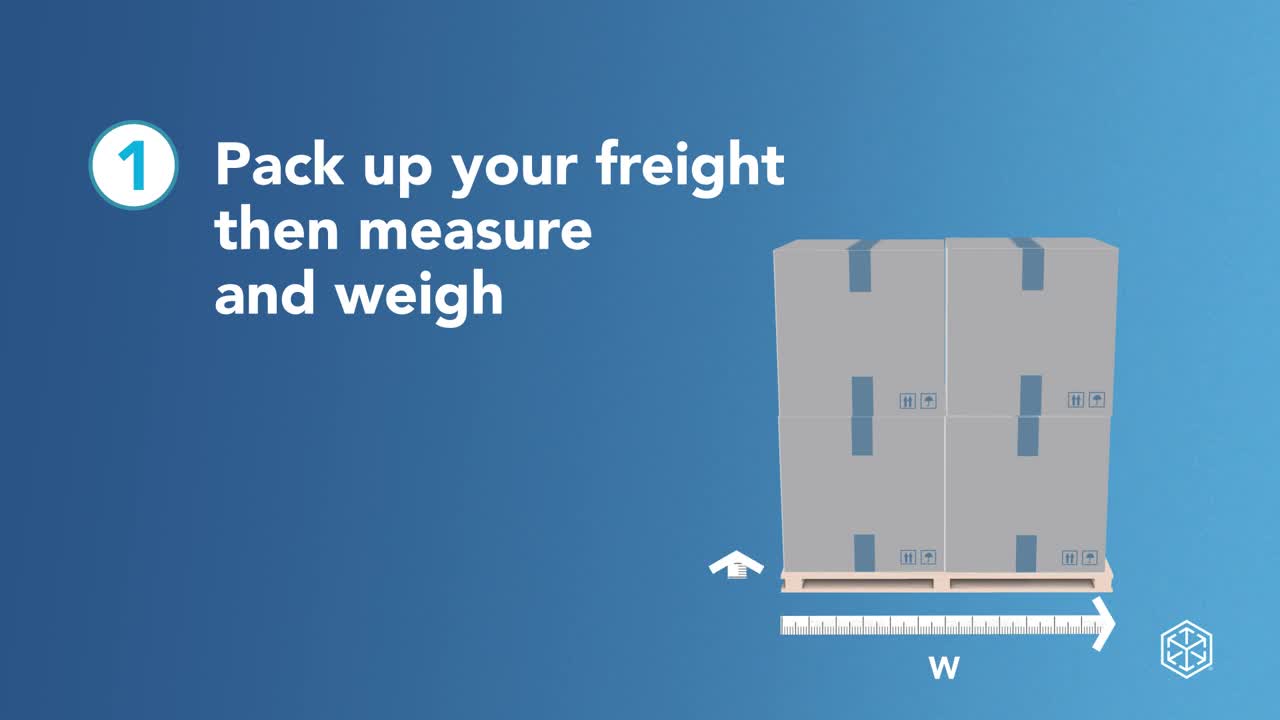
How to calculate shipping costs
Having precise shipment details in advance is the key to accurate quotes. See everything you need to know to accurately calculate freight shipping costs in this quick one minute video.
Calculate your freight cost
Freight cost estimator: Compare rates instantly with Freightquote®
Current market conditions, available equipment and drivers, along with diesel fuel prices can all affect the cost of freight. Those factors may be out of your control, but accurately calculating the cost for each of your shipments is easy when you use our step-by-step freight shipping calculator.
5 key things to consider when estimating freight shipping rates
1. Freight weight, dimensions, or volume
The volume of the cargo is a critical factor. There is a lot riding on the accurate notation of freight dimensions, weight, and the commodity itself. Accurate dimensions tell a carrier how much space your freight will take on a truck while correct weight factors into the maximum pounds a carrier can legally haul.

No freight scale? No problem!
Get creative ideas to calculate freight weight in this quick one minute video, or check out our blog for more tips.
Blog: No Scale, No Sweat: Quote Your Freight Without a Scale
2. Shipping origin and destination
The distance between the origin and destination is another significant factor in determining freight rates. Longer distances generally result in higher rates due to increased fuel consumption, labor costs, and operational expenses.
You may know the cities your freight is shipping to and from, but do you have the accurate ZIP codes? Some cities are rather widespread out and different factors, like ease of access, may impact freight rates depending on which area your freight is traveling to.
At the very least, you’ll want to know the following about the locations for both pickup and delivery:
- Is there a loading dock?
- Is an appointment needed?
- Will the freight be brought inside by the driver?
- Will the driver unload and bring the freight inside?
- Would you like the consignee to be called prior to delivery?
- Is it a business in a commercially zoned or residentially zoned area?
Freight cost calculation tip
Base freight rates typically assume each location will have a dock or a means to load and offload a shipment. If the freight arrives, but there is no loading dock or forklift available to unload the freight, a liftgate will likely be used. The use of a liftgate is considered an additional service or accessorial—one that comes with a fee. If you’re unaware whether additional services are needed when calculating your shipping quote, it could result in a freight rate adjustment that can eat into your bottom line.
3. Freight class and density
Both dimensions and weight determine a shipment’s density, which helps determine the correct freight classification for less than truckload (LTL) freight. All of which can impact your freight shipping quotes.
For trucking shipments within the United States, the National Motor Freight Traffic Association (NMFTA) has established a standardized classification system called the National Motor Freight Classification (NMFC). It categorizes goods into different classes based on their characteristics, such as density, handling, and liability. The freight class, along with the weight, is used to determine trucking rates.
4. Type of goods
As mentioned above, the nature of the goods being shipped can impact your freight rates. Knowing the commodity can help you determine the type of equipment you may need to move your products. For example, if you’re shipping produce, you may need your freight shipping quote to include temperature controlled equipment.
Perishable, hazardous, or high-value goods may require special handling, additional documentation, or shipper's insurance. We’re happy to help determine if LTL, truckload, partial truckload or intermodal is the right fit for your freight.
5. Economic conditions
- Fuel prices: Fluctuations in fuel prices can affect transportation costs and, consequently, freight rates. Higher fuel costs typically lead to increased rates to cover the additional expenses.
- Seasonal demand: Demand for transportation services can vary throughout the year, and rates may be influenced by seasonal factors. For example, during peak shipping times, such as the holiday season, rates may increase due to higher demand.
- Market conditions: Overall market conditions, including supply and demand dynamics, competition among carriers, and economic factors, can influence freight rates. Market volatility and disruptions can lead to fluctuations in rates.
LTL vs. FTL Estimate Factors: Comparison Table
When estimating freight shipping costs, one of the most important decisions is choosing between less than truckload (LTL) shipping and full truckload (FTL) shipping. While both services move freight by truck, LTL and FTL pricing are calculated very differently based on factors such as shipment size, weight, distance, freight class, and accessorial services.
Understanding how LTL vs. FTL costs are determined can help shippers choose the most cost‑effective option for their load, avoid unexpected fees, and better estimate total transportation spend.
The comparison table below breaks down the key cost factors, rate structures, and ideal use cases for LTL and FTL shipping to clarify how each mode impacts freight pricing.
| Aspect | Less Than Truckload (LTL) | Full Truckload (FTL) |
|---|---|---|
| Typical shipment size |
|
|
| How rates are calculated |
|
|
| Key cost factors |
|
|
| Best for… |
|
|
Quoting tip: Use the “Compare all services” option on your next quote to easily compare LTL and FTL rates when you’re unsure which service is best for your freight.
How to save on freight shipping costs
Managing freight costs can be overwhelming. To help keep shipping costs low, it is equally important to understand both the cost of shipping freight and ways to eliminate extra services. Watch this video for more cost-saving ideas, or check out our blog to learn more.
Blog: Slash Your Shipping Costs
Freight cost estimate FAQs
- How do I figure out shipping costs?
-
Figuring out freight shipping costs works the same way as calculating them. For the best results, gather all your shipment details before starting a quote.
It’s important to provide precise information (dimensions, weight, addresses, etc.) because the accuracy of a freight quote depends on the details you provide. With everything in hand, start a free quote today!
- How much does it cost to ship a 20 lb. or 300 lb. package?
-
The cost to ship any package, whether 20 lbs. or 300 lbs. depends on several factors besides just the weight.
For a ~20 lb. item that ships as freight (rather than parcel), you’ll usually pay at least the LTL minimum charge, which is the base minimum fee a carrier will charge for any freight shipment.
A 300 lb. shipment will certainly cost more in total, but it might be less expensive per pound because freight carriers often give better rates for heavier shipments (they often offer “weight breaks,” which are lower rates at certain weight thresholds).
Other factors play a big role too: the distance it’s traveling, the freight class (density) of the item, and whether any special services are needed. For example, a 300 lb. pallet going 100 miles might actually cost less than a 20 lb. oversized crate going 1,000 miles. The only way to know for sure is to get a freight quote for each shipment.